
Explainability
Explain why each restaurant was recommended and which preferences influenced the match.
Refresh the page if the video isn't playing
My role: Lead Product Designer in collaboration with Product Manager and Engineers.
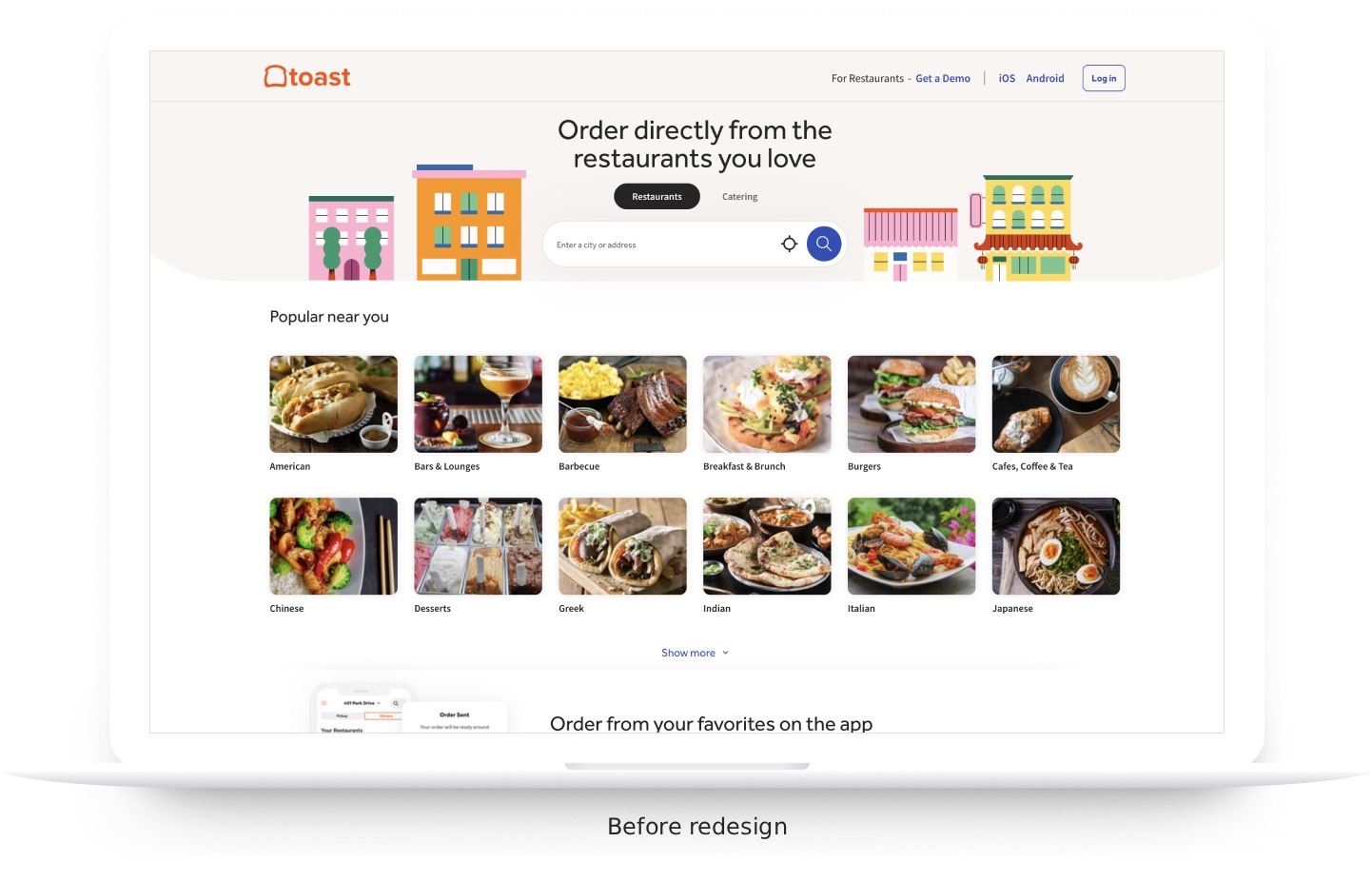
Problem: The existing Toast web restaurant discovery experience made it difficult for guests to discover restaurants, contributing to low order conversion.
Solution: We built a responsive web marketplace for discovering Toast restaurants, starting with familiar search and filtering patterns. We then explored an AI-powered conversational experience that understood nuanced requests and identified the best matches for guests—rather than leaving them to compare results and determine which options fit their needs.
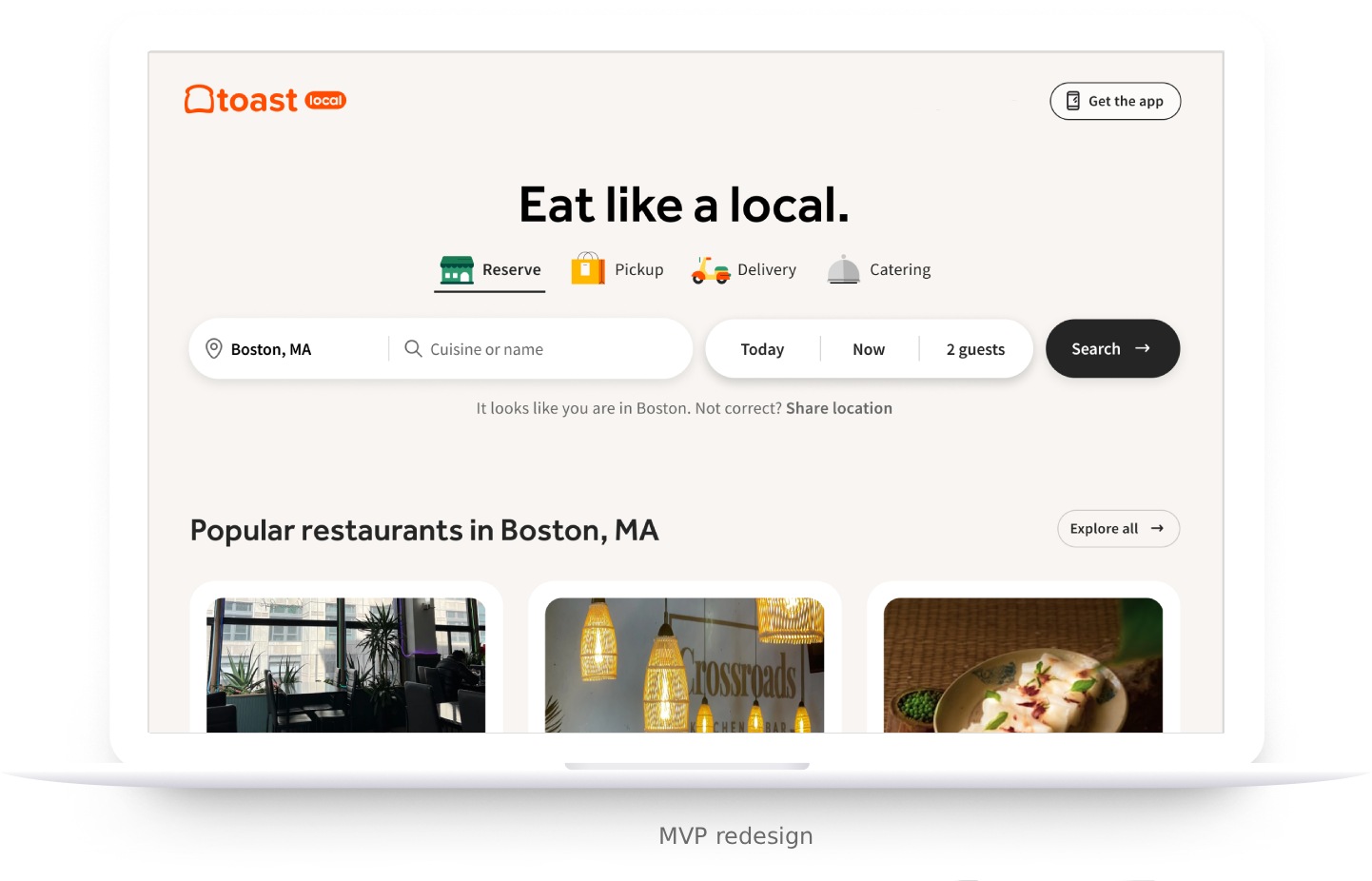
MVP Redesign Outcome: 62K+ site views, increased takeout conversion by 22%, and generated 146–242 daily reservations.
More on Process More on Final DesignWe started the process by interviewing guests to understand how they currently search for restaurants and what pain points are related to it:
"If I'm looking for somewhere to take my son to eat, how hard is it to show me if the restaurant has a playground? It's really tricky to find places to go out to eat that have playgrounds for children." Guest research participant
We asked participants about existing restaurant discovery products, what worked well, and what could be improved:
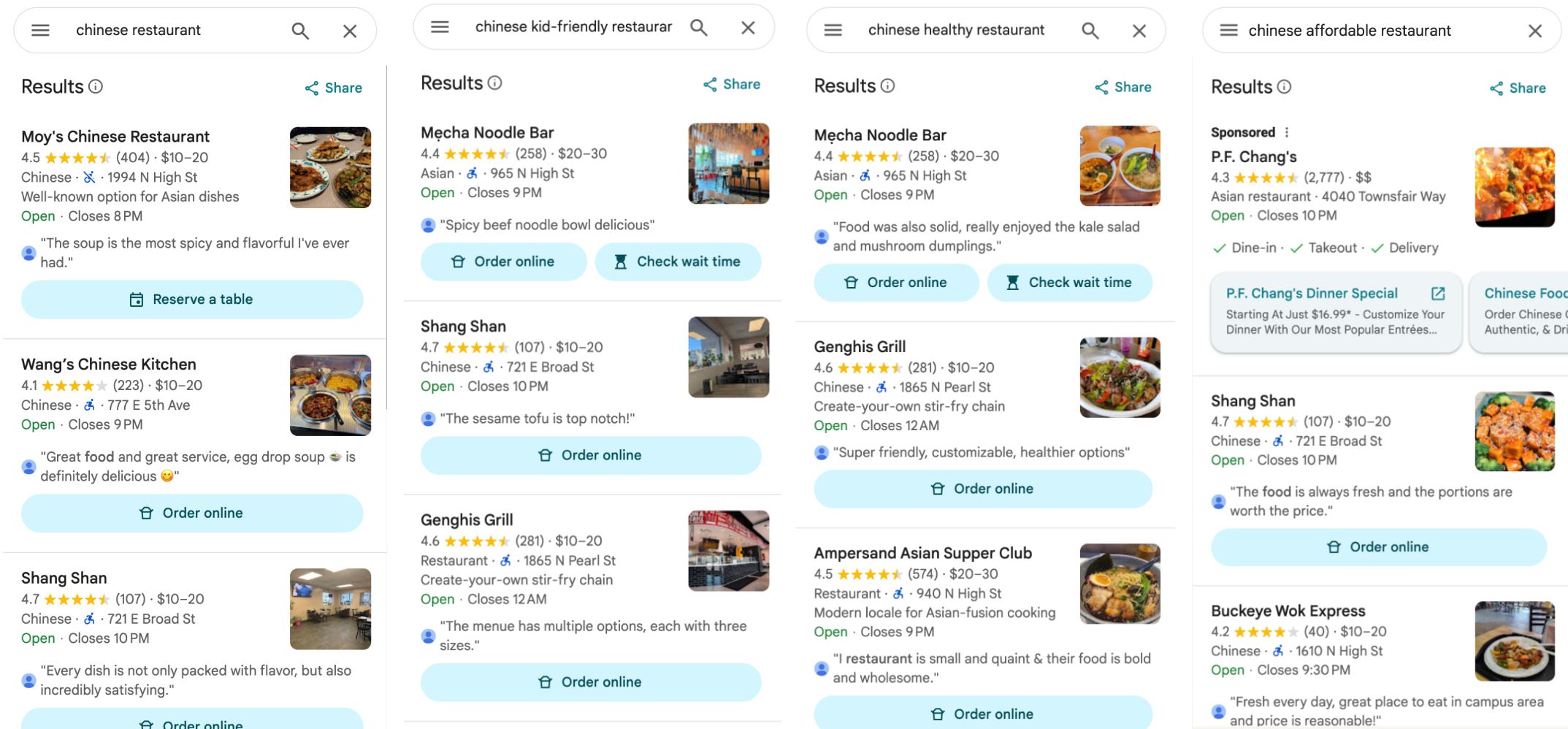
Searches for specific needs like “Chinese kid-friendly” or “Chinese healthy” returns similar results, making it difficult to identify which restaurant best matched the criteria.
“I wish that I could just have an app know my preferences first off or me be able to input my situation and my specifications on what I'm looking for and have it recognize those things.” Research participant
Research showed that guests needed a restaurant discovery experience that could understand nuanced needs beyond traditional search and filters. This created an opportunity to differentiate our marketplace through AI-powered discovery—but our restaurant data wasn’t yet robust enough to deliver a reliable experience.
While we improved the underlying data, we staged the work to keep delivering value: first, build a scalable web design system; then, redesign and launch the marketplace with traditional search and filtering; use Claude Code to rapidly prototype and validate new discovery experiences; and ultimately evolve toward AI-powered search that could understand nuanced requests and surface the best matches.
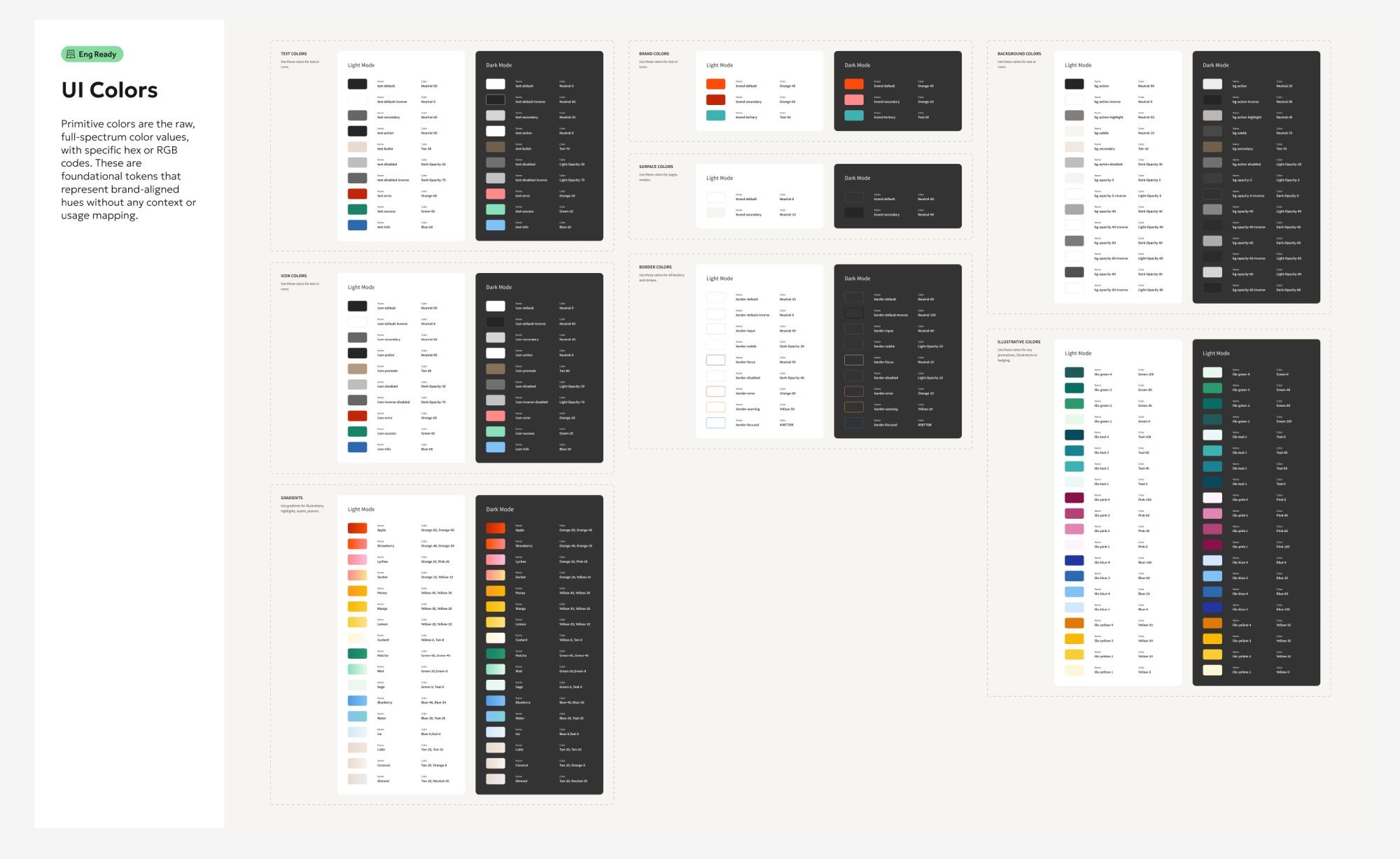
To streamline collaboration and reduce repetitive work, we've created a web design system that helped designers and engineers build consistent experiences faster and more efficiently.
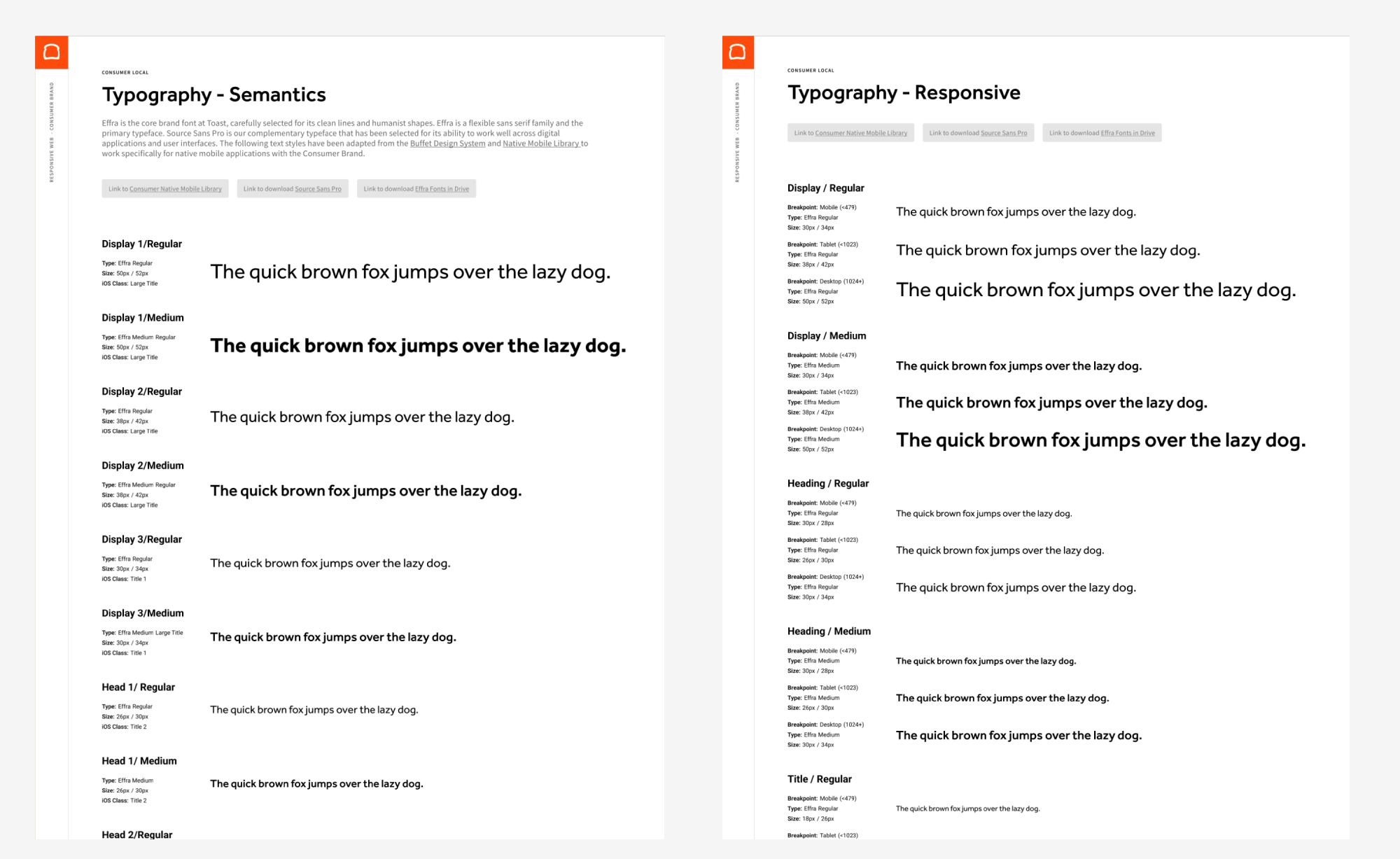
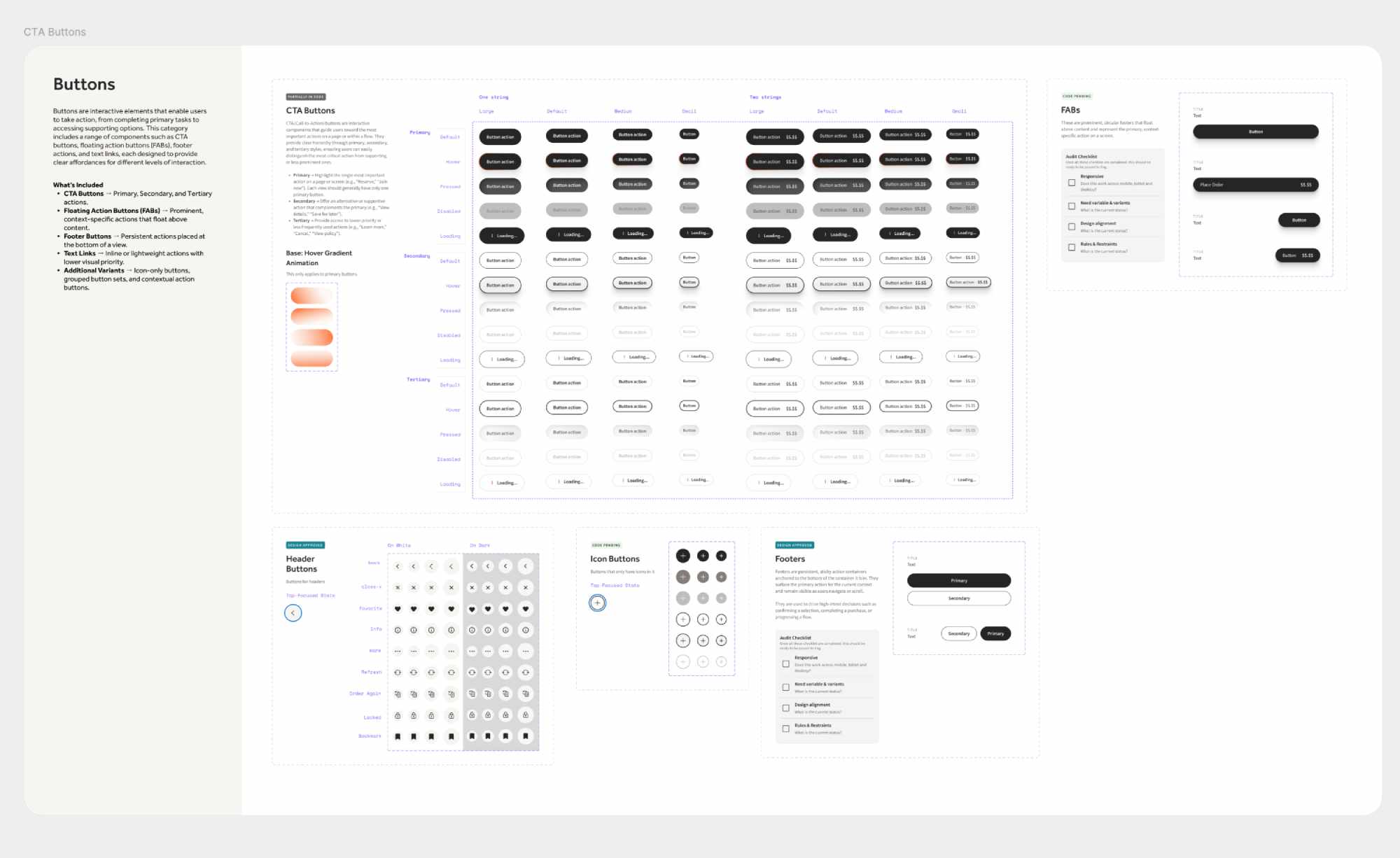
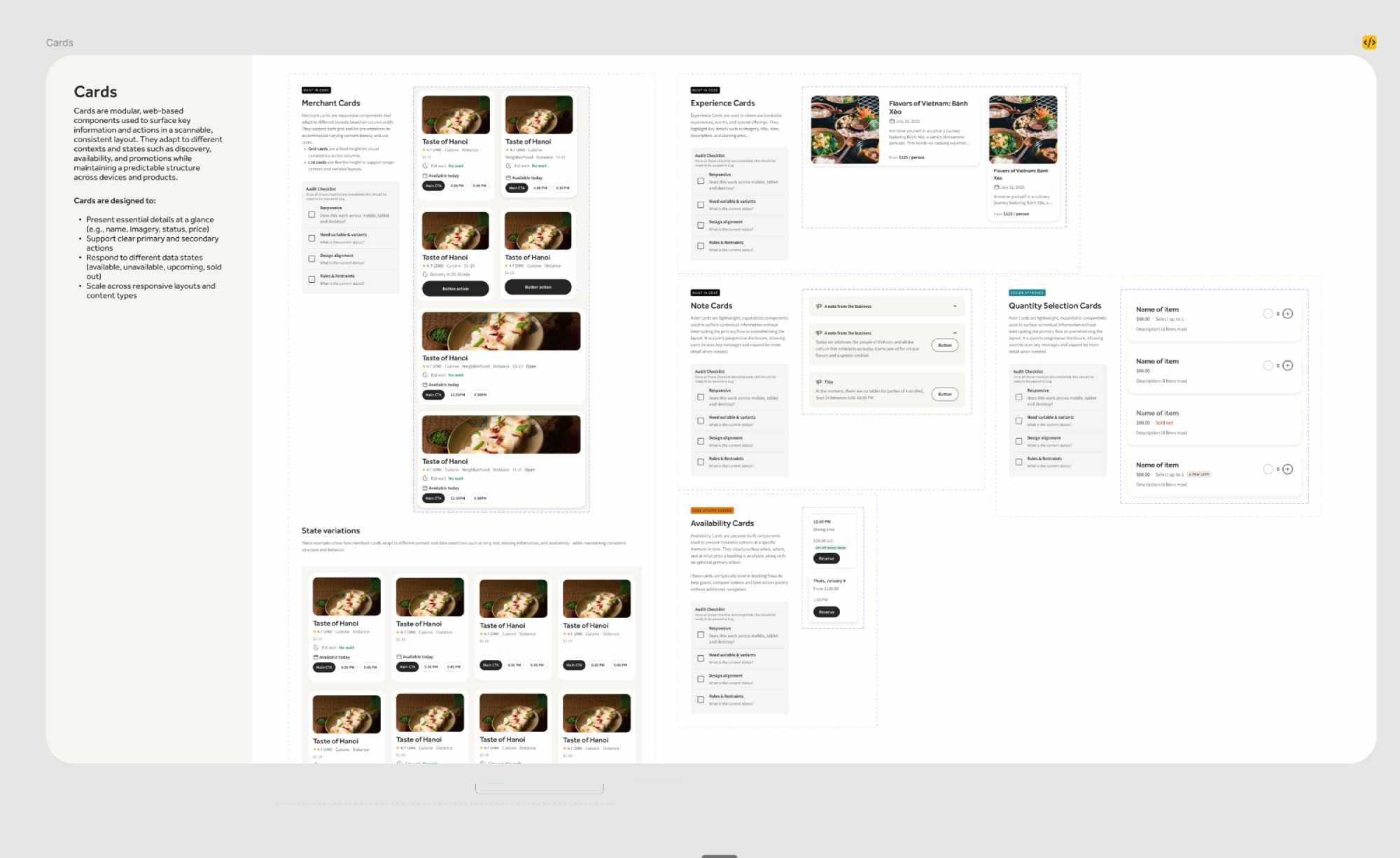
For the MVP, we launched a quick redesign of the existing experience. As a follow-up, I used Claude Code to rapidly prototype a new restaurant page and map experience. This allowed us to gather early feedback from guests, restaurant owners, and managers before investing further in engineering.
Map view prototype Restaurant page prototypeAs an MVP follow up, we explored conversational AI to let guests express those needs naturally rather than translate them into filters. Instead of returning a long list to evaluate, the experience interprets the request, considers relevant signals such as ordering and reservation history, reviews, and dietary preferences, and recommends three strong matches—explaining why each fits. The goal was to shift the work of evaluating options from the guest to the AI.
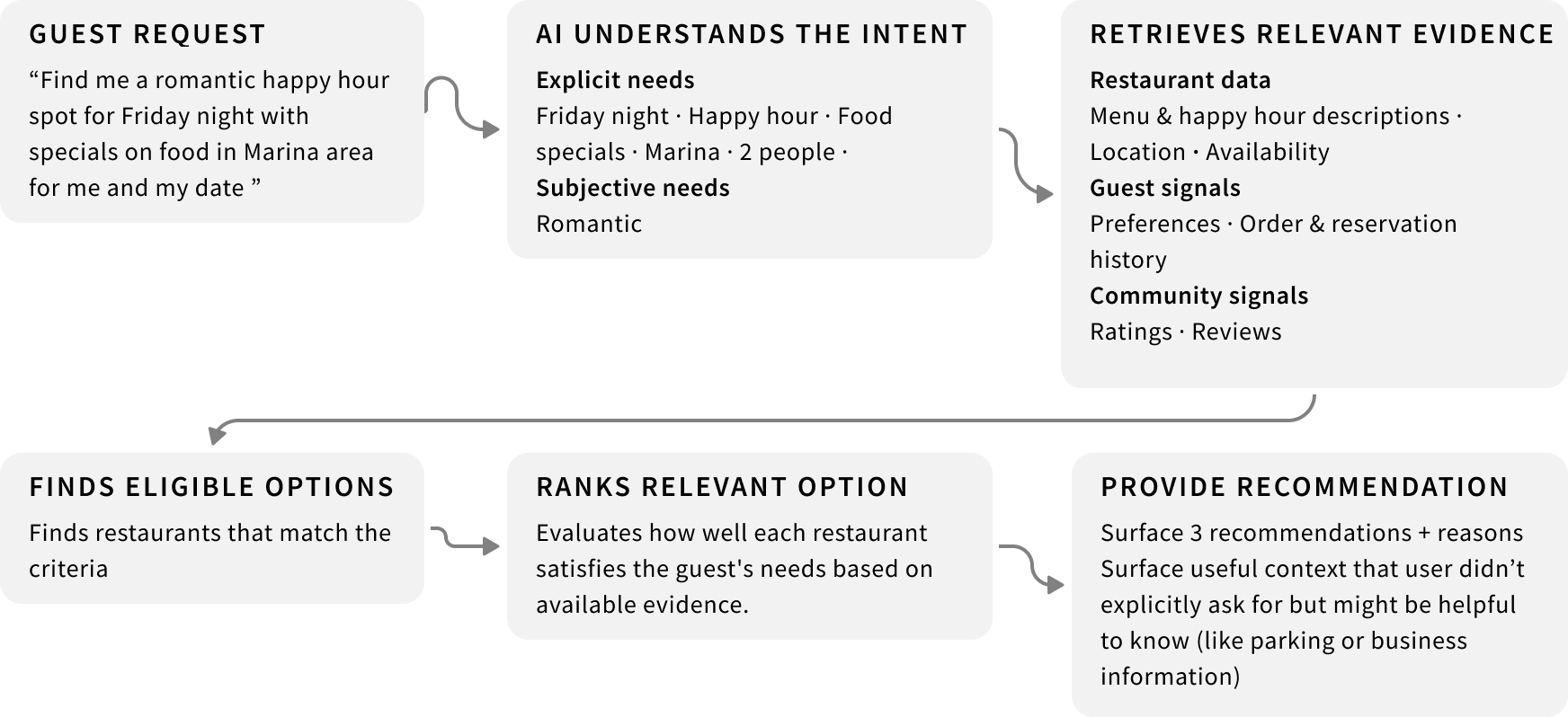
Next, we defined how the experience could translate a guest’s natural-language request into explicit and subjective needs and evaluate restaurants against them. To differentiate Toast’s search from competitors, we incorporated two data sources unique to our ecosystem: menu-item feedback and guest ordering history.
Feedback collected on individual menu items through the QR-code payment experience gave us more granular insight than traditional restaurant-level reviews. Guest ordering history added a layer of personalization, helping us understand individual preferences based on where and what guests actually ordered. Together, these signals gave the AI richer context for identifying and recommending restaurants that matched each guest’s needs.
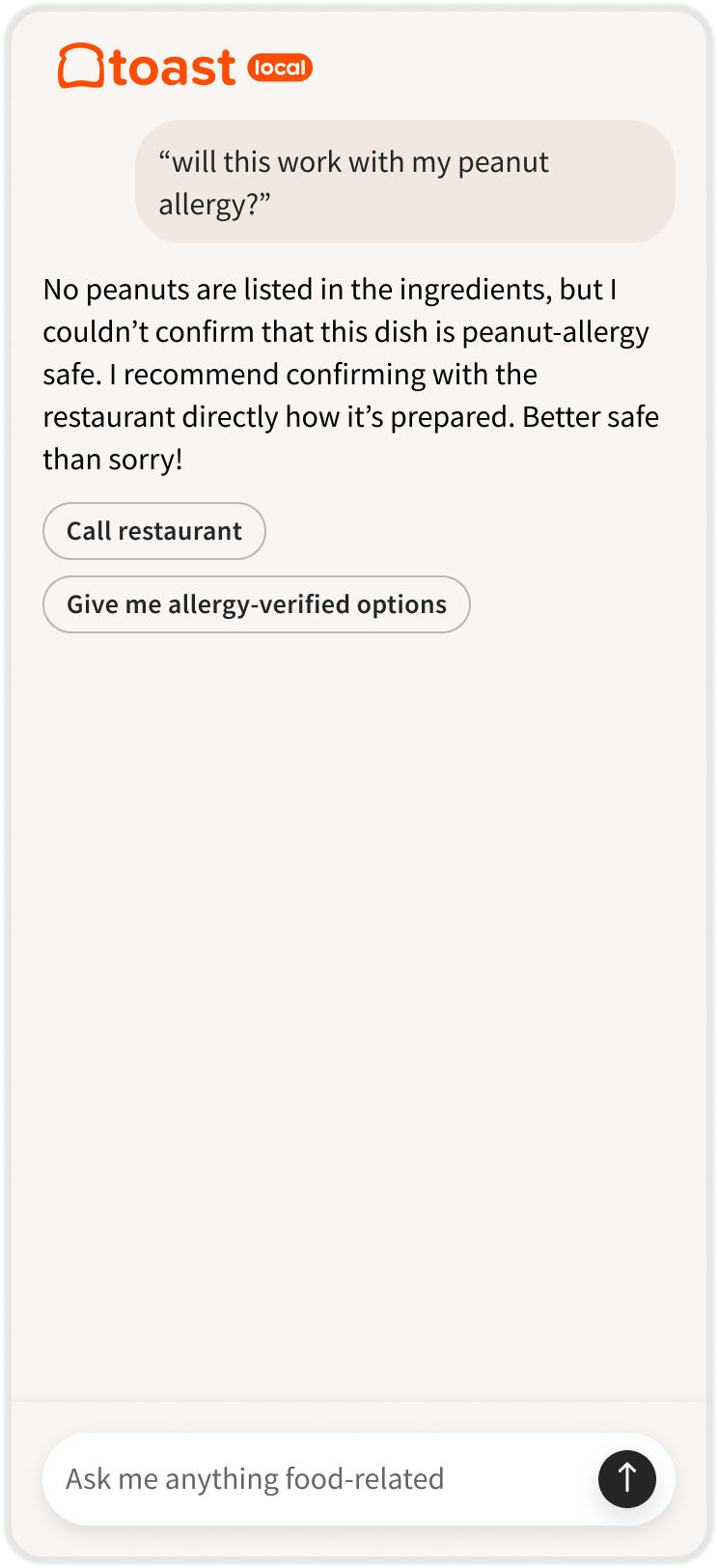
For high-stakes requests like food allergies, the AI should recognize when it doesn’t have enough verified information, transparently communicate its limitations, and guide guests toward confirming details directly with the restaurant.
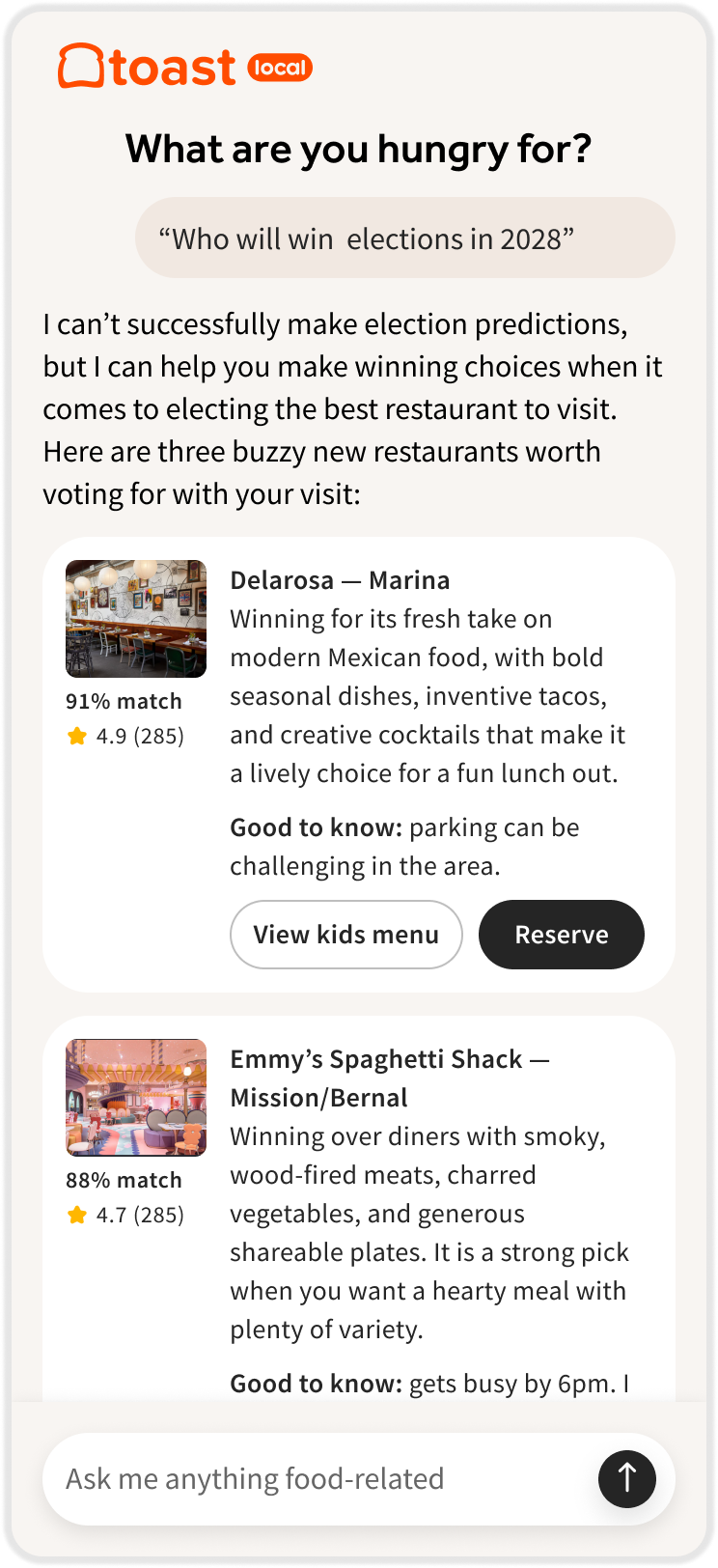
To create trust, we've defined clear boundaries around what the assistant could and couldn’t answer. When users ask questions outside of restaurant discovery, the AI should acknowledge the request while guiding the conversation back toward finding the right dining experience.
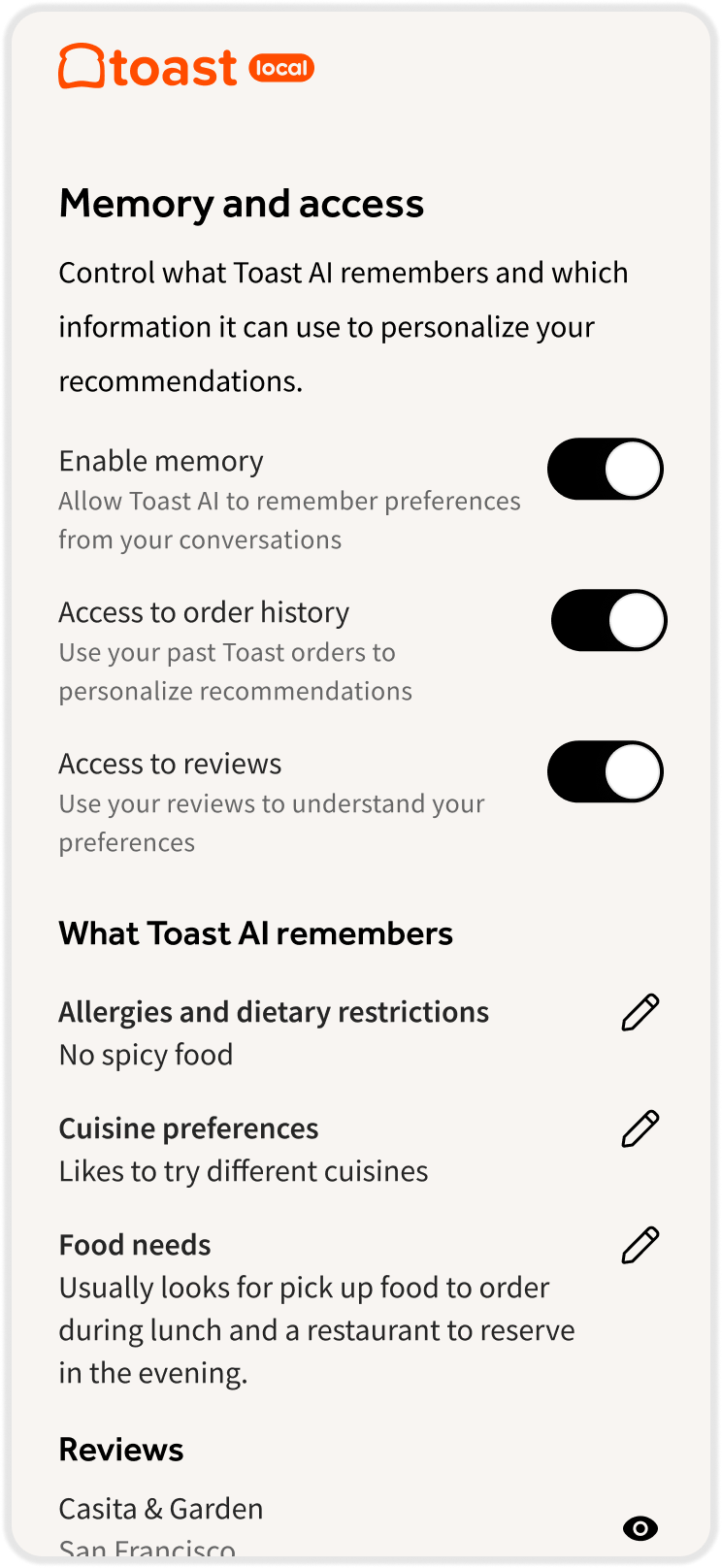
To build trust, guests need visibility into what AI remembers and control over how their data is used.
Explain why each restaurant was recommended and which preferences influenced the match.
Avoid favoring large or popular restaurants by default, giving independent restaurants an equal opportunity to surface.
Recognize when information is missing or uncertain instead of making assumptions.
Give guests visibility and control over what history, preferences, and personal signals are remembered and used.
Show the evidence behind recommendations and communicate uncertainty when information cannot be verified.
Let guests refine recommendations, provide feedback, or choose another path instead of treating AI suggestions as the final answer.
Building trust is essential to creating effective AI experiences. We focused on the following principles to make recommendations feel transparent, relevant, and reliable.